The next generation of digital platforms won’t just give you better tools to manage the work. More of the work will happen in the background. Our latest updates to Auptimate are another step in that direction.
For years, SaaS has followed a familiar model: give users better tools, then let them do the work. Better dashboards, better forms, better e-signatures, better task management. The technology improved, but someone still had to operate every step of the process.
There is a growing argument that this model is starting to change. Call it the “SaaSpocalypse”, Service as Software, or simply the next phase of digital services. The idea is broadly the same: technology is moving from giving people tools to complete processes towards handling more of those processes in the background.
For Auptimate, that means making the infrastructure behind private-market investments increasingly seamless. We already collect investor information digitally, generate documents, obtain electronic signatures and track the actions required to run investment vehicles. What we’re changing is how much manual work sits between those steps.
Our latest updates make these processes quicker, reduce the back-and-forth required to complete them, and give deal leads and fund managers better visibility across the investor journey.
From managing steps to managing outcomes
Consider something as routine as collecting information from an investor. Someone needs to request the right information, make sure it reaches the right person, check what’s been submitted and follow up if something is still outstanding.
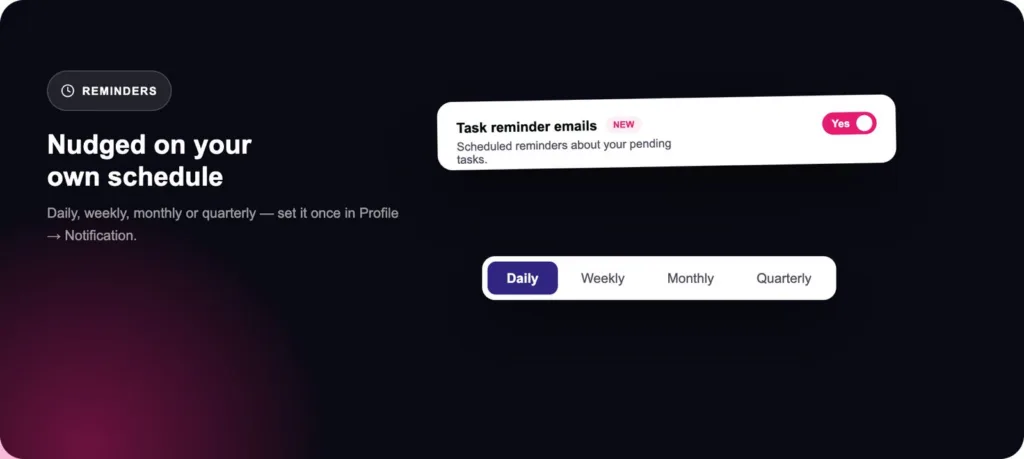
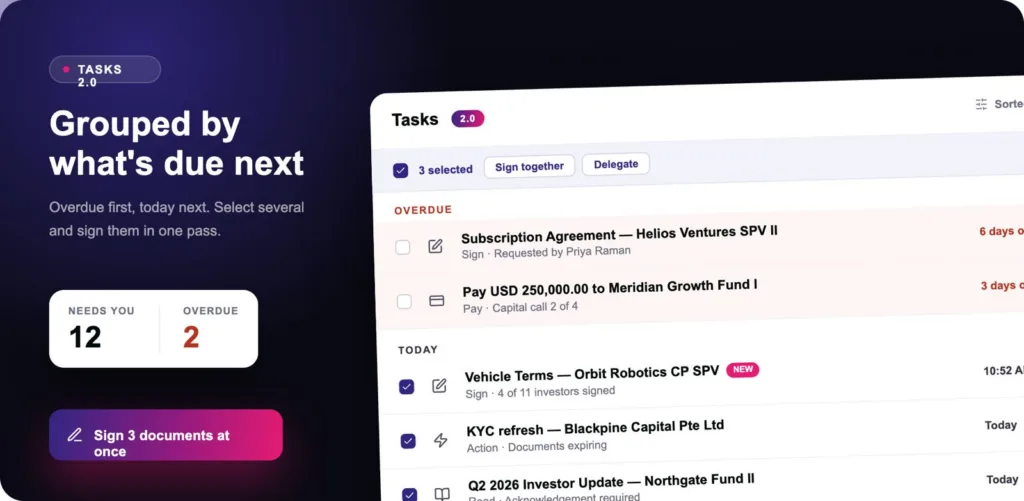
Auptimate could already manage these actions digitally. With our latest improvements to Tasks, more of the workflow can now happen within the platform itself. A task can collect structured information through text fields, multiple-choice questions, dates, confirmations and file uploads. It can be assigned to an investing entity rather than requiring an administrator to know exactly which individual should act. Tasks can also be tagged, access to sensitive information can be controlled, and email reminders can bring outstanding actions back to a user’s attention.
The important change isn’t any single feature. It’s the amount of coordination required around the process. Instead of your team keeping track of every step and following up manually, more of the workflow can progress through Auptimate.
This also gives deal leads and fund managers more granular visibility into where investors are in a process, what has been completed and what remains outstanding. Rather than piecing the investor journey together across emails and separate systems, more of that activity can be tracked in one place.
The same shift is happening with documents
Auptimate has supported digital documents and electronic signatures for some time. With AuptiSign 2.0, we’re significantly improving the infrastructure around how those documents are generated, executed and tracked.
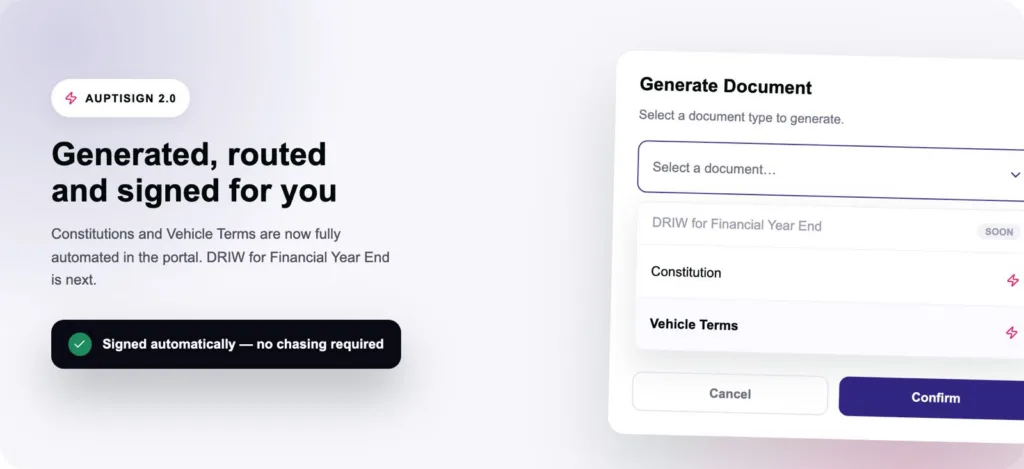
For supported Singapore Syndicate SPVs and Founder SPVs, Constitutions and Vehicle Terms can now be generated directly from the vehicle’s Documents tab. Select the document you need and Auptimate generates it, personalises it to the SPV and creates the relevant signing tasks. A process that previously involved preparing these documents manually can now be completed in a fraction of the time.
AuptiSign 2.0 is also live for FATCA/CRS Self-Certification Forms, Share Certificates and Syndicate SPV Subscription Sheets. The signing experience remains intentionally familiar, but the infrastructure behind it has been upgraded. AuptiSign 2.0 supports advanced electronic signatures, alongside a redesigned signature audit report and improvements to how users interact with documents.
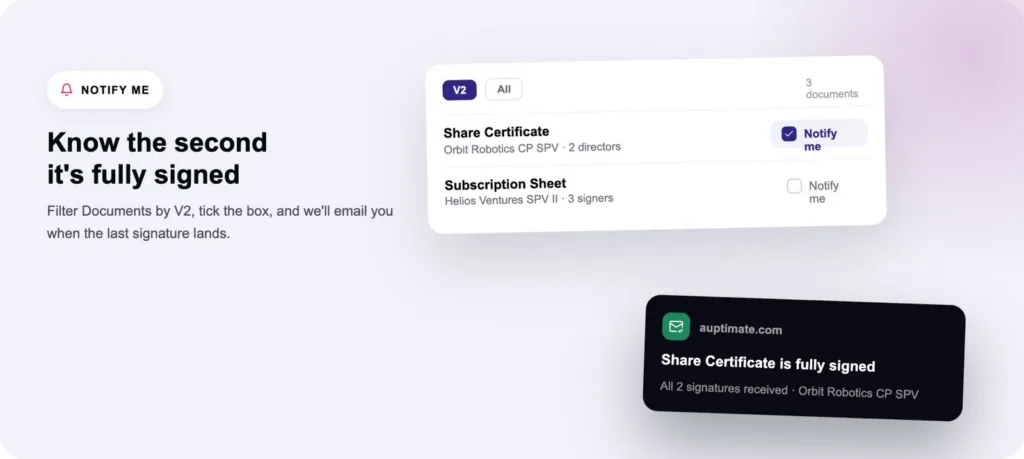
Users can sign using text input in addition to drawing, uploading or reusing a signature, while email reminders can take them directly to the document that needs attention. For administrators, pending document status can be tracked directly from the Documents tab, including who has and hasn’t signed. Documents can also be previewed before signing, and reminders can be sent from within the platform.
Electronic signatures aren’t new to Auptimate. What’s changing is the amount of work required around them.
Building the infrastructure behind the experience. Some of the most important improvements won’t be particularly visible to users, and that’s intentional.
One of the biggest changes behind AuptiSign 2.0 is our internal infrastructure for creating and publishing document templates. This allows us to introduce new templates much more quickly, so we can progressively automate more of the standard documentation involved in running investment vehicles.
We started with documents already supported by AuptiSign and are expanding from there. Constitutions and Vehicle Terms are part of that progression, with more templates and vehicle types to follow.
The value isn’t another interface for you to learn. It’s what happens behind the scenes. Documents can be generated when they’re needed, relevant signing tasks can be created, outstanding actions can be followed up and administrators can see where things stand with less manual coordination.
The best infrastructure improvements are often the ones you barely notice. The process simply moves more efficiently.
What this shift means for private markets
Private-market operations are particularly well suited to this shift. Running an SPV or fund involves many repeatable processes, but enough complexity that teams have historically spent significant time moving information between documents, emails, spreadsheets and different service providers.
Our goal isn’t simply to add more functionality to an online platform. It’s to make more of the underlying operational process happen seamlessly, while keeping people involved where review, judgement and oversight matter.
That’s what connects these latest updates. Tasks can now handle more of the actions and information required throughout the investor journey. AuptiSign brings more document generation, execution and tracking into the same digital workflow. And the infrastructure behind both allows us to continue improving how these processes are handled over time.
For deal leads and fund managers, the outcome is straightforward: quicker processes, less back-and-forth and better visibility across the investor journey.
If that means we’re contributing, in our own small way, to the SaaSpocalypse, we’re quite comfortable with that.