

A common question among repeat syndicate leads
Many syndicate leads start with a simple question: “Should I just keep running SPVs, or is it time to launch a fund?”
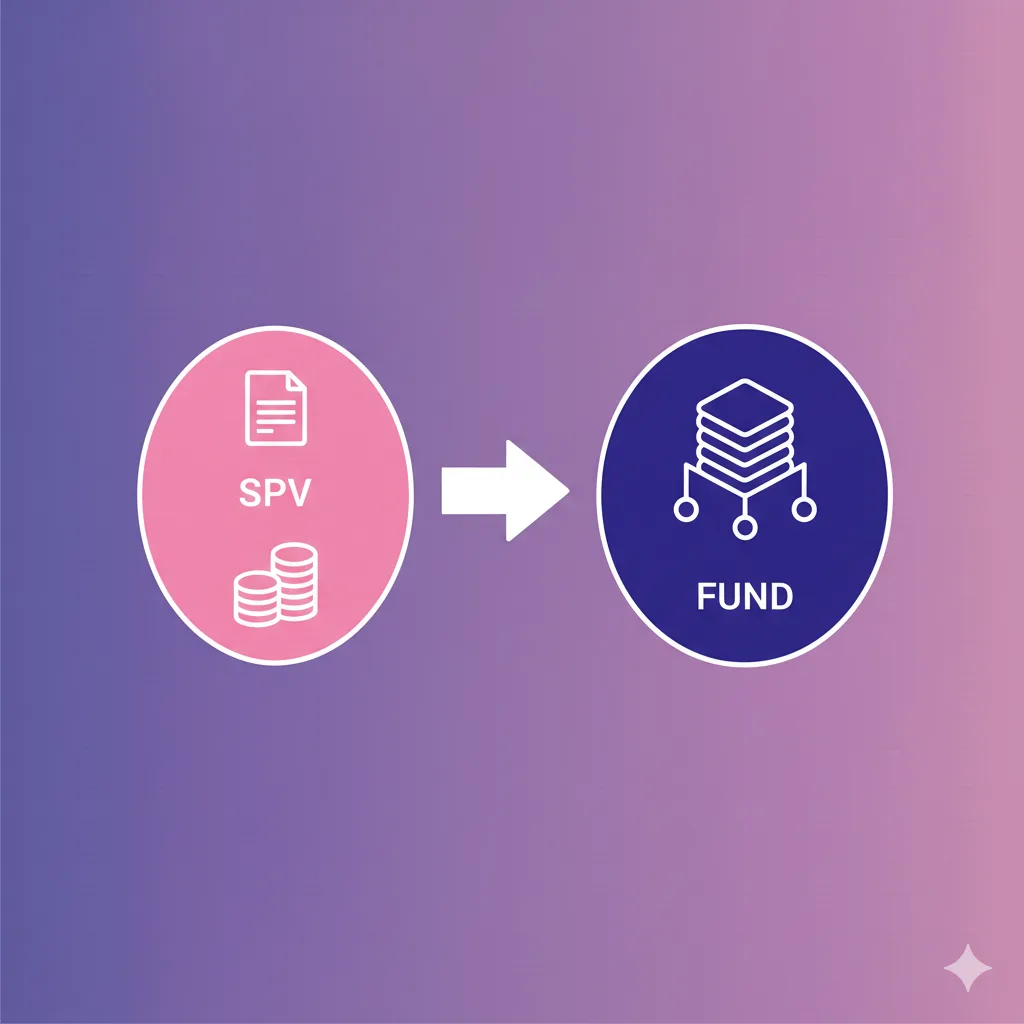
There is no universal threshold where a syndicate suddenly becomes a fund. Instead, the transition usually happens when operational complexity, investor expectations, and capital cadence begin to outgrow one-off structures.
This guide explains when it makes sense to level up from syndicates to a fund, what signals matter most, and how experienced managers think about the decision.
What is the difference between a syndicate and a fund?
A syndicate typically refers to deal-by-deal investing, often structured through individual SPVs. Each investment is raised, documented, and managed separately.
A fund pools capital upfront under a single legal and governance structure, deploying capital across multiple investments according to a defined mandate.
The difference is not only legal. It affects:
- How capital is raised
- How investors commit
- How operations, reporting, and compliance scale
- How LPs perceive risk and professionalism
The most common reasons syndicate leads consider becoming a fund
Most transitions are driven by pressure points, not ambition alone.
1. Capital is becoming harder to coordinate deal by deal
If every new investment requires:
- Fresh commitments
- Re-education of investors
- Repeated documentation
Then time-to-close starts to slow. Funds reduce this friction by securing capital once, then deploying it repeatedly.
2. Investor expectations have changed
As syndicates mature, LPs often begin asking:
- “What does the pipeline look like beyond this deal?”
- “How often will capital be deployed?”
- “What reporting cadence can we expect?”
These questions signal a shift from opportunistic participation to portfolio-level thinking, which aligns more naturally with a fund structure.
3. Operational overhead is increasing
Running multiple SPVs introduces repetition:
- Multiple bank accounts
- Separate audits or financial statements
- Fragmented reporting
At a certain point, operational drag becomes a constraint on investing, not just an administrative inconvenience.
Key signals it may be time to level up to a fund
1. You are raising repeatedly from the same investors
If the majority of your capital comes from a core group of repeat LPs, a fund can simplify their experience and strengthen alignment.
2. You have a consistent strategy
Funds work best when there is:
- A clear asset class
- Defined geography or sector
- Repeatable decision logic
If each deal looks fundamentally different, SPVs may still be appropriate.
3. You are deploying capital multiple times per year
Higher deal velocity increases the value of:
- Pre-committed capital
- Standardised governance
- Predictable reporting
This is one of the clearest inflection points.
4. LPs are asking for fund-level features
Examples include:
- Portfolio-level reporting
- Clear fee and carry frameworks
- Formal governance
These are signals that your investor base is evolving.
Why some managers stay with syndicates longer and why that can still work
Not every successful investor needs a fund. Syndicates and SPVs remain effective when:
- Deal flow is irregular
- Capital sizes vary widely
- The investor base is highly flexible
- Speed and optionality matter more than scale
Many experienced investors intentionally maintain syndicate models because they value flexibility over permanence.
The key is intentionality. Problems arise when syndicates are used by default, not by design.
The trade-offs to consider before launching a fund
Funds introduce structure and responsibility
While funds reduce friction in some areas, they introduce:
- Ongoing regulatory obligations
- Formal governance requirements
- Fixed operating costs
A fund is a long-term commitment, not a structural shortcut.
Reputation and execution matter more
Once capital is pooled:
- Underperformance is more visible
- Communication gaps are harder to recover from
- Operational missteps have broader impact
This is why many managers wait until their process is proven.
A practical way to think about the transition
Instead of asking “Should I launch a fund?”, experienced managers ask:
- Do I have repeatable decision-making?
- Do my investors want exposure to a strategy or just individual deals?
- Is my time better spent investing or administering structures?
- Am I ready for ongoing responsibility, not just episodic execution?
If the answers consistently point in one direction, the structure usually follows.
Structure should follow strategy, not the other way around.
Moving from a syndicate to a fund is not a graduation. It is a strategic choice based on scale, cadence, and investor alignment.
Well-run syndicates can outperform poorly structured funds.
Well-timed funds can unlock scale that syndicates cannot.
The right structure is the one that supports disciplined investing without introducing unnecessary friction.
Using a Multi-Asset Syndicate as a middle ground
A Multi-Asset Syndicate allows a syndicate lead to raise capital once and deploy it across multiple investments under a single SPV, rather than setting up a new vehicle for every deal.
This approach is often used when:
-
The same group of investors wants exposure to multiple deals
-
Deal flow is frequent, but a fund structure feels premature
-
Operational repetition across SPVs is starting to slow execution
Unlike a traditional fund, a Multi-Asset SPV:
-
Does not require a licensed fund manager
-
Does not introduce regulatory reporting obligations
-
Maintains the flexibility of an SPV
-
Keeps compliance and costs relatively low
At the same time, it reduces friction by standardising onboarding, documentation, and operations across multiple investments.
Platforms like Auptimate’s Multi-Asset Syndicate are designed to support this middle ground, helping syndicate leads run repeatable, multi-deal strategies within an SPV framework, while keeping compliance and operations straightforward. Book a call today to learn more.
